Guides

Basic Git Commands

Learn every command with examples, then try it in the simulator.

Basics

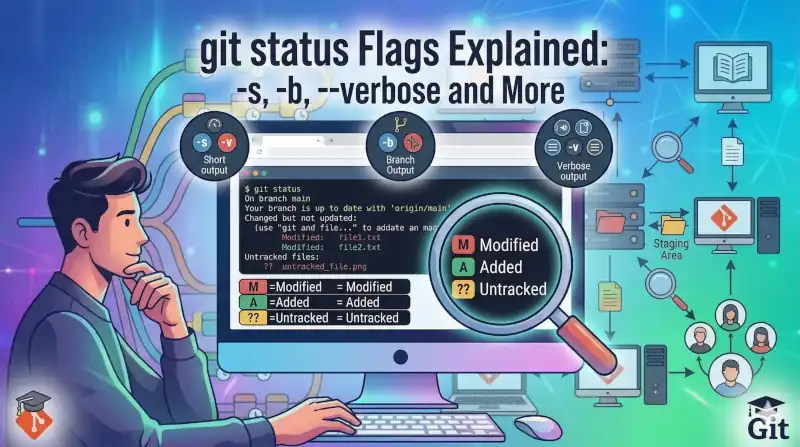
git status Flags Explained: -s, -b, --verbose and More

git status is one of the most essential Git commands for checking your repository's current state. This guide covers not just the basics but all parameters that shape the output, filter content, and detect renames — plus XY status codes and real-world usage scenarios.

Basics

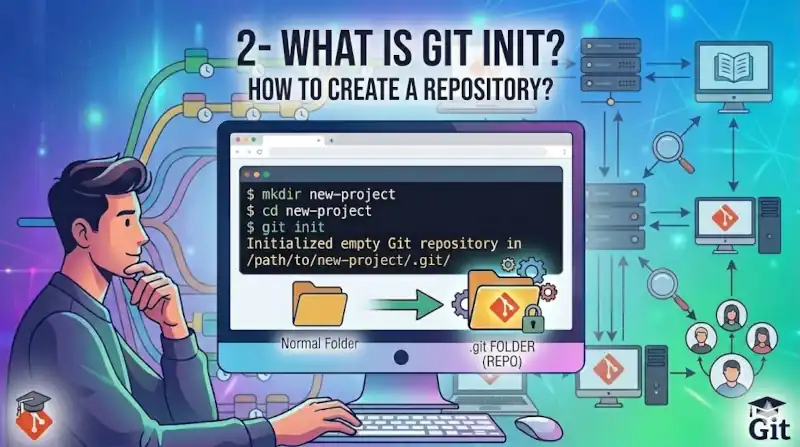
git init: How to Create a Git Repository

The very first step in any Git project — create a repository with a single command.

Basics

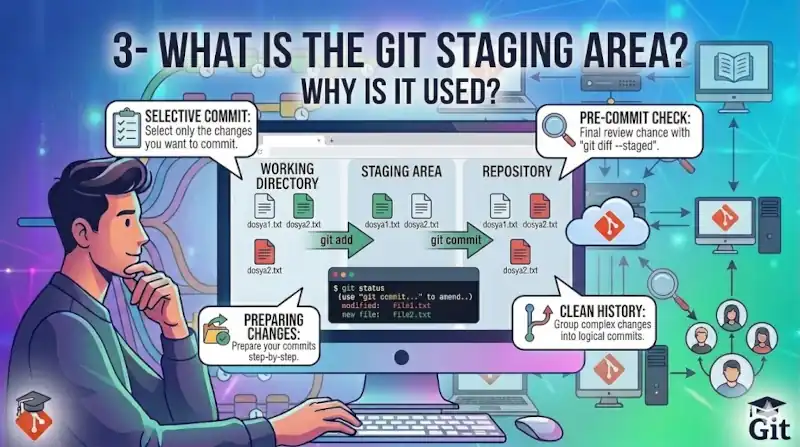
What is the Git Staging Area and Why Does It Exist?

The Staging Area is Git's buffer zone that lets you choose exactly what goes into each commit, keeping your version history clean and intentional.

Basics

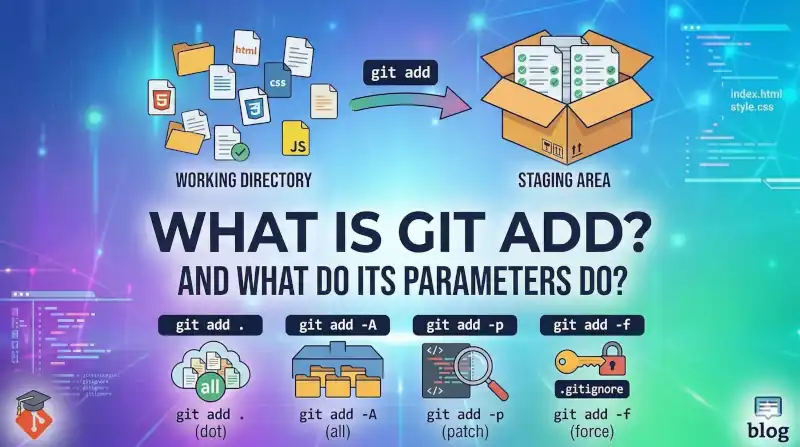
What is Git Add? A Complete Guide to Its Parameters

In this guide, we explore the git add command, one of the most fundamental commands in the Git version control system. We explain Git's three-stage workflow (Working Tree, Staging Area, Repo) by simplifying it with an everyday "shipping box" analogy.

Basics

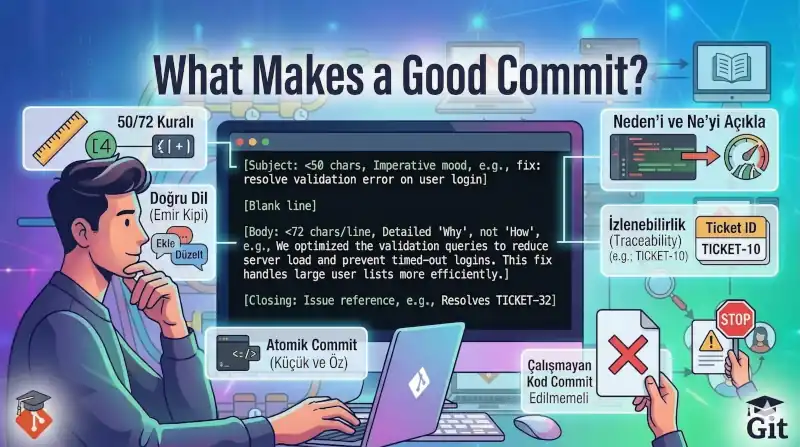
How to Write a Good Git Commit Message

No more meaningless commit messages like "update", "fix", or "asd". In this article, we break down the anatomy of a good Git commit message — covering atomic commits, the 50/72 rule, and universal standards like Conventional Commits to help you manage your project history professionally.

Basics

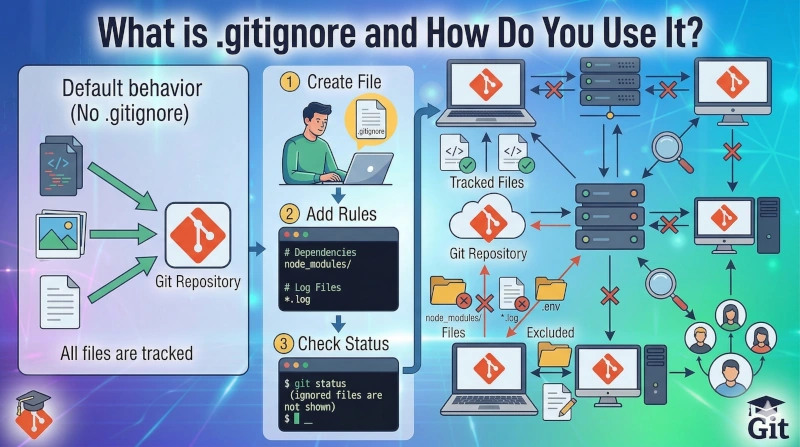
What is .gitignore and How Do You Use It?

.gitignore tells Git which files to leave untracked. A complete guide covering syntax rules, file categories, and ready-to-use examples.
Practice what you've learned
Try git commands in our interactive simulator that works like a real terminal.
Open Simulator
main
2 changes
ASP.NET Core MVC
git 2.43.0